When broken water lines, appliance supply overflows, severe storm surges, or overhead leaks saturate residential and commercial carpeting, rapid sub-surface extraction is critical to prevent permanent delamination and toxic mold amplification. Restore Crest deploys industrial truck-mounted vacuum extractors, weighted sub-surface rover wands, and high-volume Low Grain Refrigerant (LGR) dehumidifiers across Dallas, Highland Park, University Park, Preston Hollow, and North Texas within 45 minutes to salvage both carpet fibers and underlying cushion in place.

Speak directly with an on-duty field supervisor. Immediate dispatch across North Texas in under 45 minutes.
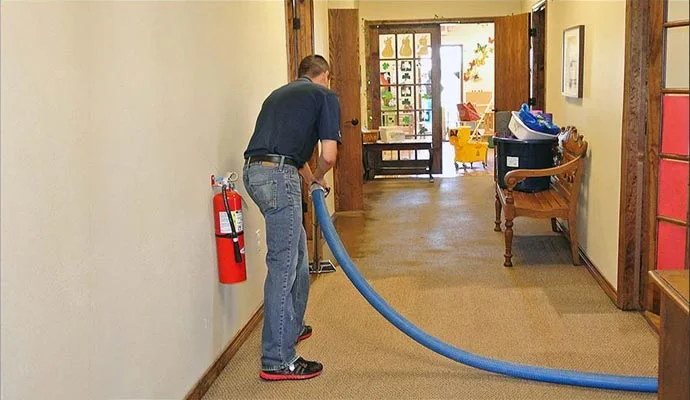
Understanding the multi-layered engineering of modern residential and commercial carpeting is the key to non-destructive water extraction and complete fiber salvage.
Whether sparked by a burst pipe or an appliance leak, standing water immediately penetrates nylon, wool, or polyester face yarns, triggering rapid capillary downward flow.
Prolonged immersion causes SBR latex adhesive to absorb water and soften, losing up to 80% tensile bond strength. This causes secondary backing separation, permanent buckling, and irreversible wrinkling.
Open-cell foam padding absorbs up to 4x its weight in water, creating an isolated 100% RH micro-climate. Trapped moisture triggers fungal spore germination within 24–36 hours without mold remediation.
Rather than tearing up carpet, our heavy-duty weighted rovers extract 95% of trapped water from face fiber and cushion simultaneously under our unified water damage restoration protocols.
We follow rigorous IICRC S500 professional water damage restoration standards to determine when carpets and cushions can be scientifically salvaged in place.
Originates from sanitary sources such as broken domestic water supply lines, overflowing sinks, clean toilet tank supply lines, or refrigerator ice maker feeds. When water extraction commences within the critical first 24 to 48 hours, the carpet assembly, latex adhesive, and underlying polyurethane cushion are 100% salvageable in place using weighted sub-surface extraction and high-capacity LGR dehumidification without unhooking tack strips.
Contains significant chemical or biological contaminants that may cause discomfort or sickness if exposed. Common sources include washing machine overflows, dishwasher discharge, or toilet bowl overflows containing urine. Under IICRC S500 guidelines, porous rebond carpet cushion must generally be removed and replaced, while synthetic face carpeting can be safely extracted, hot-water decontaminated, sanitized, and reinstalled over new pad.
Grossly contaminated water containing pathogenic agents, sewage backflow, rising surface groundwater from street floods, or Category 1 water standing for over 72 hours. Because porous carpet yarns and open-cell foam cushion absorb toxic bacteria, viruses, and endotoxins, in-place salvage is prohibited by safety codes. Materials must be safely removed under containment protocols by our Dallas sewage backup cleanup professionals.
Executing high-vacuum extraction, compression pad dewatering, and psychrometric dehumidification to restore your flooring without unnecessary replacement.
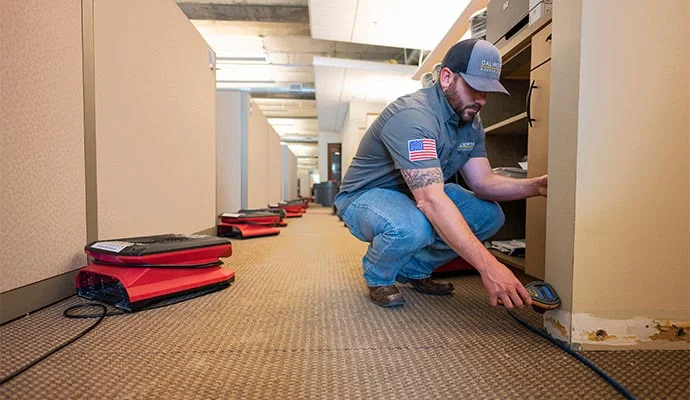
Within 45 minutes of dispatch, our Dallas technicians conduct a comprehensive non-destructive boundary assessment using high-resolution FLIR thermal imaging cameras. Evaporative cooling differentials clearly illuminate the exact boundary of water migration beneath carpet fibers and into perimeter drywall baseboards. We deploy calibrated HydroSensor penetrating electronic probes through the carpet pile into the pad and concrete slab or plywood subfloor, mapping moisture percentages across every square foot. Unaffected rooms are measured to establish the property's baseline dry standard. If water has migrated into subfloor systems or adjacent wood rooms, we coordinate with our hardwood floor water damage specialists to ensure complete subfloor recovery.
Before deploying sub-surface compression equipment, standing free water must be removed from the carpet surface. Our mobile rigs utilize industrial truck-mounted dual-stage vacuum blowers generating up to 16 inches of mercury (in. Hg) vacuum lift and over 600 CFM of airflow. Using heavy-gauge stainless steel extraction wands equipped with glide seals, our technicians perform slow overlapping extraction passes to remove thousands of gallons of standing water from the face yarn, instantly reducing hydrostatic head pressure and preventing lateral capillary spread into adjacent rooms.
Water trapped in the polyurethane foam pad cannot be extracted with surface wands alone. Restore Crest deploys self-propelled weighted rover extraction platforms (such as the Hydro-X X-Treme extractor and Water Claw sub-surface tools). By utilizing the technician's calibrated body weight, the machine compresses the carpet face and the underlying rebond cushion against the hard subfloor. The immense vacuum seal draws trapped water straight through the backing matrix into high-capacity waste recovery tanks. This technology removes up to 90% to 95% of trapped water directly from the pad in a single operational phase without disengaging the carpet from tack strips.
Depending on the age, weave, and condition of the carpet backing, we select between two advanced drying methodologies: direct surface drying or controlled carpet floating. For delicate, older, or luxury broadlooms, we deploy high-velocity centrifugal and axial air movers angled at 45 degrees to generate a laminar vortex across the carpet surface without lifting the backing, eliminating the risk of delamination. For durable synthetic carpets requiring rapid subfloor drying, we gently disengage an inconspicuous corner and insert high-static snout air blowers beneath the carpet to create a buoyant cushion of warm desiccated air that dries both the pad and subfloor simultaneously.
Air movers evaporate liquid water into vapor, but if that airborne humidity is not continuously extracted, it will condense onto cooler surfaces and trigger secondary mold damage. We deploy commercial Low Grain Refrigerant (LGR) dehumidifiers capable of driving ambient Grains Per Pound (GPP) below 35. By creating a massive vapor pressure differential between the wet carpet assembly and the desiccated ambient air, we accelerate deep bound moisture evaporation from the pad and concrete slab, cutting standard drying times by more than half. If moisture has migrated overhead, our technicians coordinate with our ceiling water damage repair specialists to capture trapped moisture in upper cavities.
Once moisture readings confirm the carpet, cushion, and subfloor have returned to their certified dry baseline standard, we apply an EPA-registered, thymol-based botanical antimicrobial solution to eradicate odor-causing bacteria and inhibit mold spores without leaving chemical residues or harming children and pets. Technicians use commercial carpet grooming rakes to restore pile orientation, eliminate matting, and accelerate fiber resilience. If carpet edges were disengaged for floating, our master carpet mechanics re-stretch and re-tack the perimeter using power stretchers, ensuring flawless, tight, wrinkle-free installation.
Authentic jobsite photography from real residential and commercial flooded carpet salvage deployments across North Texas.
The decisions you make during the first two hours determine whether your carpet and cushion can be saved in place or ruined permanently.
Different carpet fibers and manufacturing techniques react uniquely to water. Our technicians calibrate vacuum lift, nozzle pressure, and airflow rates accordingly.
Commonly installed in Dallas basements, media rooms, and high-traffic family areas, Berber carpeting features continuous yarn loops. While polypropylene (olefin) fibers are inherently hydrophobic and resist liquid absorption, the tight loop construction creates severe capillary entrapment beneath the backing. Furthermore, Berber is exceptionally susceptible to "zippering"—where a snagged loop pulls an entire row of tufts.
Found in master suites and living rooms across North Dallas, plush cut pile carpeting features exposed yarn tips that absorb significant surface liquid through capillary wicking. Nylon 6,6 can absorb up to 8% of its dry weight in moisture within the fiber core itself, leading to temporary fiber swelling, pile crushing, and matting under heavy standing water.
Installed throughout Downtown Dallas office towers, Uptown retail suites, and medical facilities, commercial direct glue-down carpeting lacks an underlying foam cushion, adhering straight to concrete slab floors with water-based mastic adhesives. Standing water threatens to re-emulsify the adhesive, breaking the chemical bond to the concrete slab.
We never begin work without providing a complete, itemized, flat-rate estimate in writing. No hidden dispatch charges, no open-ended hourly billing, and no surprise add-ons.
| Service Category | Technical Scope & Deliverables Included | Expected Duration | Transparent Flat Rate |
|---|---|---|---|
| Emergency Carpet Hydro-Diagnostic & Thermal Mapping | Guaranteed 45-minute on-site arrival, FLIR thermal imaging perimeter boundary scans, deep HydroSensor pad probes, subfloor moisture readings, dry standard establishment & written salvage assessment | 1 - 2 Hours On-Site | $250 - $375 |
| Truck-Mounted High-Volume Surface Free Water Extraction | Truck-mounted dual-stage high-vacuum extraction wands with glide seals, bulk surface liquid evacuation, initial water containment, and baseboard moisture checks | 2 - 3 Hours Initial Phase | $0.40 - $0.75 / sq. ft. |
| Specialty Weighted Sub-Surface Rover & Pad Dewatering | Self-propelled weighted rover extractor (Hydro-X / Water Claw) compressing carpet pile and polyurethane pad to draw up to 95% of trapped sub-surface liquid directly into truck waste tanks | 2 - 4 Hours Active Dewatering | $0.45 - $0.85 / sq. ft. |
| Industrial LGR Dehumidifier & Axial Air Mover Deployment | High-capacity Low Grain Refrigerant (LGR) dehumidification units, commercial 3-speed axial and centrifugal air movers, micro-climate poly barriers, and daily digital psychrometric logging | 2 - 3 Days Active Drying | $125 - $195 / day / unit |
| EPA Botanical Antimicrobial Wash & Fiber Pile Grooming | Hospital-grade botanical thymol antimicrobial application to eliminate bacterial odor and prevent fungal amplification, followed by mechanical pile restoration grooming and perimeter re-tacking | Post-Drying Final Phase | $0.25 - $0.40 / sq. ft. |
We accept all standard direct payment methods including major credit cards, bank wire transfers, and corporate invoicing. You review and authorize all pricing line items upfront before technicians begin work.

"Most people panic when water pours into their carpet because standard cleaners say the entire room must be ripped out. In over 85% of clean water incidents where we arrive within the first 24 to 48 hours, our weighted sub-surface rover extractors draw water right out of the cushion without pulling the carpet off the tack strip. I personally verify that the backing adhesive has not delaminated and inspect moisture levels with penetrating probes to make sure every square inch reaches verified dry standards before sign-off."
Direct, authoritative technical answers on salvaging flooded carpets and pads, preventing delamination, drying timelines, and upfront costs across Dallas, TX.
Yes, absolutely. Under IICRC S500 professional restoration standards, Category 1 clean water losses (such as broken supply lines, sink overflows, or clean rain intrusions) can be completely dried in place if mitigation begins within 24 to 48 hours. By utilizing weighted sub-surface rover extractors, our equipment compresses the carpet face and the open-cell rebond pad against the subfloor, pulling up to 95% of trapped water directly into truck-mounted waste tanks. We then dry the remaining moisture using high-velocity laminar air movers and Low Grain Refrigerant dehumidifiers without unhooking tack strips. Read verified client experiences on our reviews and testimonials page.
Carpet delamination occurs when the synthetic styrene-butadiene rubber (SBR) latex adhesive bonding the primary backing to the secondary ActionBac backing dissolves and loses tensile holding strength due to prolonged water saturation. When wet, the latex bond strength drops by up to 80%. If people walk across wet carpet, foot friction creates lateral shear force that rips the secondary backing away, leaving permanent ripples and bubbles. We prevent delamination by immediately extracting bulk water, restricting foot traffic, and using non-invasive sub-surface extraction tools that apply strictly downward vertical pressure rather than horizontal pulling.
A consumer wet-dry vacuum generates only a tiny fraction of the static water-lift and airflow volume required to evacuate water from dense carpet cushion. A typical shop vacuum pulls liquid only from the top half-inch of the face fibers, leaving hundreds of pounds of water trapped inside the dense polyurethane rebond foam beneath. Within 24 to 48 hours, that trapped water triggers microbial amplification, resulting in severe mold odor, rot, and permanent pad degradation. Our commercial truck-mounted extraction platforms generate over 16 inches of mercury vacuum lift and 600 CFM of airflow to pull water straight through the cushion.
In standard residential settings with Category 1 water, the complete sub-surface drying cycle typically takes between 48 and 72 hours. While physical weighted extraction removes up to 95% of liquid water within the first 2 to 3 hours, the remaining microscopic bound moisture inside the carpet yarns, pad, and concrete foundation must be gently evaporated using industrial Low Grain Refrigerant (LGR) dehumidifiers and axial air movers. Our technicians monitor and log temperature, relative humidity, and moisture meter readings daily to certify completion. Discover our full disaster capabilities in our Dallas disaster restoration services guide.
Yes, walking on wet carpet can permanently ruin the installation. As explained in our textile physics analysis, water softens the SBR latex adhesive that holds the carpet backings together. When you step on wet carpet, your shoe twists and exerts lateral shear stress across the softened adhesive layer. This breaks the latex bond, causing the backing to separate and leaving permanent waves and wrinkles that cannot be restretched flat even after the carpet dries. We instruct all property owners to stay off wet carpeting until sub-surface extraction is complete.
Musty odors are caused by microbial volatile organic compounds (MVOCs) released when fungal and bacterial spores germinate in damp materials. We prevent odors through a two-step scientific protocol: first, by achieving rapid dry times under 48 to 72 hours to prevent spore germination, and second, by applying an EPA-registered botanical antimicrobial wash directly through the carpet into the pad. Formulated with natural thymol, our antimicrobial wash destroys odor-causing microorganisms at the cellular level without leaving sticky residues or dangerous chemical fumes.
Carpet floating involves disengaging a corner of the carpet from the tack strip, inserting a high-static snout blower beneath the backing, and blowing air underneath to balloon the carpet while drying the pad and concrete subfloor below. While effective for durable commercial synthetic carpets, floating carries risks of stretching and seam separation on older or delicate broadlooms. Sub-surface extraction, on the other hand, utilizes weighted compression tools and top-side vacuum wands to draw water out through the face without unhooking tack strips. Our technicians evaluate carpet age, fiber type, and backing condition to select the safest method.
Yes, but natural wool fibers require specialized thermodynamic care. Unlike synthetic nylon or polyester, wool is a natural protein fiber with a water-repellent outer cuticle and a moisture-absorbent cortex. Wool can absorb up to 30% of its dry weight in water vapor without feeling damp to the touch, but it is highly sensitive to excessive heat, high pH cleaners, and aggressive mechanical tension. In luxury Dallas residences, our master certified technicians utilize low-pressure sub-surface extraction, neutral pH botanical antimicrobials, and controlled low-heat psychrometric drying to preserve natural wool crimp, prevent dye migration, and prevent fiber shrinkage. Meet our certified team on our about Restore Crest page.
When water floods a carpeted room, it rarely stays confined to the flooring. Due to capillary action, water wicks upward into porous drywall baseboards, wall studs, and insulation. During our Phase 1 diagnostic mapping, our technicians use FLIR thermal imaging and non-invasive pin meters to check all perimeter walls. If moisture has wicked into wall cavities, we perform precision baseboard disengagement and inject warm desiccated air directly into wall studs using structural cavity drying systems, eliminating moisture before hidden mold can develop.
We operate with complete pricing transparency. Upon arrival, our lead field supervisor conducts a thorough multi-point moisture inspection and calculates the exact square footage and equipment requirements. You receive an itemized, transparent flat-rate estimate in writing before any extraction machinery is activated. You approve every service line item in advance. There are never any surprise charges, hidden travel fees, or open-ended hourly billing surprises.
Our emergency carpet water extraction vehicles and weighted rover rigs are strategically staged across major DFW expressways for rapid deployment.
Do not let contractors tear out your expensive carpeting and padding before consulting our certified master carpet restoration team. Every hour counts toward preventing permanent latex adhesive delamination, microbial amplification, and costly replacement. Speak directly with our on-duty field supervisor right now. We arrive in under 45 minutes with truck-mounted vacuum extraction rigs and weighted sub-surface rovers across Dallas County.
Fill out the details below. Our on-duty carpet restoration supervisor will contact you immediately.