Facing a traumatic event, violent crime scene, or unattended death in your home or commercial facility requires profound human compassion, forensic decontamination precision, and total privacy. Restore Crest provides 24/7 discreet biohazard recovery across Dallas County and the DFW metroplex. Our OSHA-certified forensic recovery specialists arrive in unmarked vehicles within 45 minutes, deploying hospital-grade antimicrobial decontamination, complete biological fluid extraction, and molecular odor eradication with 100% upfront flat-rate itemized pricing.

Speak directly with an on-duty field supervisor. Immediate dispatch across North Texas in under 45 minutes.
Technical decontamination, infectious pathogen containment, and molecular odor eradication executed with total privacy and reverence.
At Restore Crest Dallas, our forensic teams arrive in unbranded vehicles without logos. We shield your private family grief across Lakewood, Preston Hollow, and Uptown from curious onlookers.
Following official release by the Dallas Police Department (DPD) Crime Scene Section or the Dallas County Medical Examiner (SWIFS), our units mobilize immediately under our master disaster restoration fleet.
Working in strict adherence to OSHA 29 CFR 1910.1030, our biohazard cleanup specialists extract biological fluids, safely transport regulated medical waste, and apply hospital-grade sterilants.
No grieving family should endure hidden surcharges or post-incident billing shocks. Our certified team provides transparent, binding line-item quotes verified by ATP hygiene testing.
Understanding the severe viral, bacterial, and molecular hazards inherent in traumatic injuries, forensic crime scenes, and advanced human decomposition.
Biological fluids resulting from traumatic injuries, violent crimes, or unattended deaths present substantial public health risks governed by strict occupational health standards. Untreated biological matter contains an array of bloodborne pathogens capable of remaining infectious on environmental surfaces for prolonged periods:
Hepatitis B is exceptionally resilient; the Centers for Disease Control and Prevention (CDC) confirms that HBV can survive in dried blood on room-temperature surfaces for seven days or longer while retaining infectious potency. Hepatitis C similarly remains stable in dried biological residues for weeks. Exposure occurs through microscopic abrasions, mucous membranes, or accidental needle punctures during handling.
While HIV loses viability faster than Hepatitis outside the human host upon drying, active biological fluid pools, blood clots, and saturated porous padding create protective biological matrices where the retrovirus can remain viable for several days. Attempting to clean these biological reservoirs without OSHA Level C personal protective equipment presents unacceptable exposure risks.
Methicillin-Resistant Staphylococcus Aureus (MRSA), Clostridium difficile, and dangerous enteric bacteria proliferate rapidly in biological waste. When combined with sewage backflows or bodily elimination that frequently accompanies traumatic fatality, the resulting bacterial bio-burden demands broad-spectrum sporicides and hospital-grade EPA sterilants, similar to protocols in our Category 3 sewage backup remediation.
In an unattended death, natural post-mortem autolysis and putrefaction occur rapidly, accelerated by Dallas summer heat and humidity. The breakdown of amino acids produces volatile organic chemical compounds including cadaverine (1,5-pentanediamine), putrescine (1,4-butanediamine), indole, skatole, and butyric acid. These toxic airborne gases bind chemically to porous drywall, ceiling tiles, and air ducts, requiring specialized molecular hydroxyl odor neutralization.
Biological fluids possess low surface tension, allowing them to rapidly penetrate through carpet fibers, carpet backing, porous urethane padding, and into structural subflooring (plywood, OSB, or tongue-and-groove boards). On concrete slabs common in North Texas slab-on-grade construction, blood and decomposition fluids seep deep into microscopic capillary pores within the cementitious matrix. Furthermore, fluids flow along perimeter baseboards, entering wall cavities and pooling on bottom framing sill plates. Simply wiping the surface leaves gallons of biohazardous material festering beneath the floorboards, generating persistent noxious odors, insect infestations, and severe secondary microbial contamination.
Each traumatic incident presents unique physical, chemical, and biological complexities requiring customized remediation protocols.
When an individual passes away alone at home or in an apartment and remains undiscovered for days or weeks, natural biological decomposition accelerates rapidly. In the Texas heat, decomposition fluids saturate bedding, mattresses, subfloors, and concrete foundations, while biological gases and blowfly infestation quickly compromise the indoor air environment. Our compassionate teams remove all affected porous assemblies, eradicate pest vectors, deep-clean structural framing, and neutralize persistent odor compounds at the molecular level, ensuring that the residence is completely safe and dignified.
Violent crimes, assaults, and homicides leave behind extensive blood spatter, pooled bodily fluids, and chemical residues from police investigations (such as fingerprint graphite powders, magnetic dusting agents, and luminol chemical reagents). Following official release of the scene by the Dallas Police Department Central Substation or Jack Evans Police Headquarters detectives, Restore Crest enters under strict chain-of-custody protocols. We systematically remove all forensic chemical residues and extract biological contaminants to fully restore the space.
Experiencing a suicide or catastrophic accidental trauma within a private home or workplace is devastating. Our technicians treat these heartbreaking environments with deep reverence, gentle communication, and quiet speed. We meticulously clean high-velocity impact spatter from walls, ceilings, fixtures, and personal furnishings, salvaging cherished family heirlooms through specialized content restoration and pack-out cleaning while discreetly disposing of non-restorable materials.
Industrial machinery accidents, commercial blood spills, or infectious biohazard incidents across Dallas warehouses, office complexes, or distribution centers create immediate OSHA regulatory liability and halt operations. We provide rapid after-hours decontamination matching our commercial facility restoration capabilities, sterilizing machinery, concrete bays, and production lines with EPA-registered hospital virucides to protect employees and enable safe resumption of business.
Authentic jobsite photography from discreet forensic remediations, negative-pressure barriers, PPE Level C protocols, and ATP clearance testing across Dallas.
 Dallas • Certified Decontamination
Level C Protocol
Dallas • Certified Decontamination
Level C Protocol
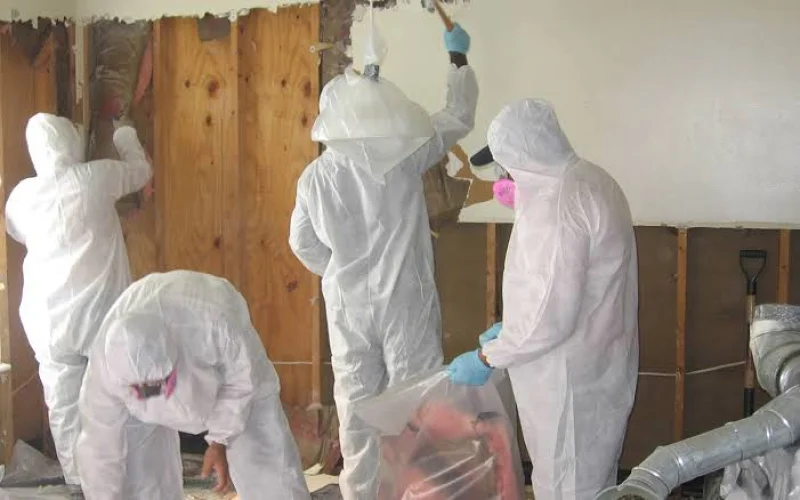
Certified technician in impermeable Tyvek suit, double nitrile gloves, and full-face respirator securing a biological hazard zone against cross-contamination.
 Oak Lawn • Medical Waste
DOT Regulated Packaging
Oak Lawn • Medical Waste
DOT Regulated Packaging
Systematic double-bagging and rigid containment of bloodborne pathogens into DOT-compliant red containers for licensed medical waste transport.
 Fort Worth • Aerosol Sterilization
ULV Aerosol Fogging
Fort Worth • Aerosol Sterilization
ULV Aerosol Fogging
Ultra-low volume atomization delivering 5-to-15 micron aerosolized broad-spectrum EPA hospital disinfectants to neutralize pathogens in hard-to-reach micro-crevices.
 Highland Park • Confidentiality
Discreet Response
Highland Park • Confidentiality
Discreet Response
Full confidentiality guaranteed through plain, unmarked response vehicles protecting family dignity, tenant privacy, and commercial reputation.
 Arlington • Scientific Clearance
ATP Luminometry
Arlington • Scientific Clearance
ATP Luminometry
Objective quantitative luminometer testing measuring adenosine triphosphate (ATP) levels to scientifically verify biological safety before site handoff.
 Preston Hollow • Negative Air
Airlock Containment
Preston Hollow • Negative Air
Airlock Containment
Airtight 6-mil polyethylene containment chamber and HEPA negative pressure air scrubbers preventing aerosol migration into living areas during subfloor removal.
If you have encountered an unattended death, traumatic injury, or crime scene, safeguard your emotional health and physical safety by following these essential directives.
Forensic decontamination requires rigorous scientific protocols rather than casual visual inspection. We deploy advanced diagnostic instruments on every project.
Deploying specialized forensic forensic light sources emitting wavelengths between 365nm and 455nm, our technicians illuminate latent biological fluids, organic spatter, and hidden decomposition pathways that are completely undetectable under standard ambient room lighting.
Where blood has migrated into fine baseboard seams or where improper DIY scrubbing occurred prior to our arrival, chemical luminol and phenolphthalein reagents react with iron hemoglobin, producing clear chemiluminescent identification of occult blood pools requiring remediation.
Using non-destructive radiofrequency moisture meters and high-resolution thermal imaging cameras, we map biological fluid saturation beneath subflooring, wall cavities, and concrete slabs, ensuring that no hidden reservoirs are left to foster bacteria or odor, verified against our Dallas client reviews and testimonials.
We deploy digital Adenosine Triphosphate (ATP) swab luminometers to measure cellular energy across all sanitized structural surfaces. This testing provides empirical, scientific confirmation that microbiological activity has been reduced to clinical hospital baselines prior to issuing our formal decontamination certificate.
Restore Crest adheres strictly to established OSHA 29 CFR 1910.1030 standards, EPA disinfection protocols, and CDC infection control guidelines.
Our rapid-response forensic team arrives in plain, unmarked vehicles to protect your privacy. Technicians don full OSHA Level C personal protective equipment—impermeable Tyvek hazmat suits, double nitrile gloves, boots, and full-face respirators equipped with organic vapor and P100 HEPA cartridges. We seal the affected perimeter using heavy 6-mil polyethylene sheeting, magnetic zipper airlocks, and negative pressure air machines with DOP-tested HEPA filtration. This establishes an inward airflow dynamic, preventing decomposition odors and biological aerosols from escaping into unaffected hallways or living areas, utilizing the same containment principles found in our certified mold isolation protocols.
Our specialists execute surgical recovery of all visible biological materials, coagulated blood pools, and decomposition fluids. Utilizing specialized closed-loop bio-vacuum systems and hospital-grade absorbent polymers, fluids are solidified and safely evacuated into sealed containment tanks. Puncture-resistant magnetic recovery wands safely capture dangerous forensic sharps, syringes, or glass fragments, eliminating puncture hazards before structural cleaning begins.
Porous construction materials that have absorbed blood or decomposition fluids cannot be sanitized on-site and must be surgically excised. Technicians remove saturated carpeting, carpet padding, tack strips, baseboards, drywall up to twelve inches above fluid level, and contaminated subfloor panels down to structural joists. Any salvageable personal belongings situated near the zone are triaged with utmost respect, packaged, and transferred for specialized decontamination through our content restoration and pack-out facility.
All remaining non-porous and semi-porous substrates—including concrete slabs, wall studs, floor joists, and metal fixtures—are treated with medical-grade enzymatic detergents. These specialized solutions liquefy dried biological crusts, break down complex protein chains, and emulsify organic fats at the microscopic level. Surfaces receive thorough mechanical agitation followed by controlled high-temperature extraction using closed-loop sanitizing wands.
Following structural cleaning, technicians apply EPA-registered broad-spectrum hospital disinfectants formulated specifically for bloodborne pathogens, tuberculocidal efficacy, and virucidal destruction (including Hepatitis B, Hepatitis C, HIV, and MRSA). We enforce strict wet contact dwell times of ten to fifteen minutes to guarantee total pathogen neutralization. Ultra-Low Volume (ULV) cold foggers aerosolize the biocide into micro-droplets (5 to 15 microns) that penetrate deep into structural crevices, wall cavities, and porous framing.
To eliminate volatile decomposition amines (cadaverine and putrescine), we deploy high-output industrial hydroxyl generators that break down odor molecules at the atomic level without using toxic ozone gas. All exposed subflooring and framing studs are sealed with an EPA-registered antimicrobial encapsulant to lock out moisture and prevent odor migration. Quantitative ATP surface swabs verify clinical sterility, and a formal Certificate of Decontamination is issued, establishing full habitability across our North Texas service coverage territory.
Strict compliance with Texas Commission on Environmental Quality (TCEQ) Title 30 TAC Chapter 326 and federal DOT Title 49 CFR standards.
The disposal of biohazardous materials generated during crime scene cleanup, trauma remediation, or decomposition recovery is heavily regulated under Texas state law and federal hazardous materials transport statutes. Property owners who unwittingly throw biohazardous materials into municipal trash dumpsters face substantial civil penalties and potential criminal liability under Texas environmental statutes.
Restore Crest manages the entire biohazardous waste disposal lifecycle under strict cradle-to-grave compliance protocols:
All bio-contaminated materials, excised porous items, and disposable PPE are double-bagged inside heavy-duty 3-mil thick, tear-resistant red biohazard bags bearing the universal biohazard warning symbol. Bags are heat-sealed and placed into rigid, puncture-resistant, leak-proof corrugated boxes or high-density polyethylene drums approved by the U.S. Department of Transportation.
Biohazard waste is loaded into dedicated, permitted transport vehicles operated by licensed medical waste transporters registered with the Texas Commission on Environmental Quality (TCEQ). Vehicles feature sealed cargo compartments and spill-response kits to guarantee safe highway transport across the Dallas-Fort Worth metroplex.
Under Texas health rules, regulated medical waste containing bloodborne pathogens cannot be landfilled. All collected biohazard waste is transported directly to state-licensed thermal destruction facilities where it undergoes high-temperature medical incineration (exceeding 1,800°F), completely destroying all organic pathogens and converting biological waste to sterile ash.
Every pound of waste is weighed, barcoded, and documented on an official multi-copy Uniform Hazardous Waste Manifest. Upon final incineration, we provide the property owner with a signed manifest copy along with an official Restore Crest Certificate of Decontamination, establishing complete legal liability protection for the property owner.
Restore Crest adapts its decontamination protocols to meet specific legal, operational, and privacy requirements across diverse property sectors.
In family residences across Preston Hollow, Lakewood, North Dallas, and Lake Highlands, our priority is safeguarding family dignity, providing gentle communication, and completely restoring living spaces so healing can begin. We work quietly, preserve sentimental family keepsakes, and eliminate all traces of the tragedy with hospital-grade sanitization.
Property managers and landlords face urgent tenant safety concerns, odor complaints, and strict Texas Property Code habitability obligations when an unattended death or trauma occurs in a rental unit. Our rapid unmarked response isolates the unit with negative air containment, prevents fluid seepage through shared subfloor joists to tenant units below, and provides full clearance documentation for rapid re-leasing.
Traumatic accidents or medical crises in Dallas commercial offices, hotels, or industrial facilities along the I-35E Stemmons corridor create immediate OSHA compliance issues and employee distress. We execute after-hours containment and sterilization matching our commercial facility disaster recovery operations, enabling safe operational reopening the next morning without disrupting public reputation.
"Traumatic events and unattended deaths represent the most sensitive, emotionally vulnerable moments a property owner can experience. When our team is summoned to your Dallas residence or business, we arrive in unmarked vehicles, work with quiet reverence, and establish hospital-grade negative pressure containment. We never take shortcuts with biological pathogens, and we never exploit your grief with vague quotes or surprise disposal fees. We provide 100% upfront, transparent flat-rate itemized pricing before a single piece of equipment is turned on. You have my solemn personal commitment that your property will be returned to complete safety, dignity, and peace of mind."
Experiencing a traumatic emergency is emotionally exhausting. You should never have to endure confusing quotes, hidden disposal surcharges, or post-incident billing surprises. Restore Crest provides binding line-item estimates upfront, upholding our core commitments detailed on our company about page.
Our trauma and biohazard decontamination pricing is calculated using standard industry metrics based strictly on confirmed square footage of the affected zone, volume of regulated medical waste requiring licensed thermal incineration, number of HEPA negative air filtration units deployed, and certified technician hours required. Before any remediation work begins, you receive an itemized, transparent flat-rate quote across three clear service tiers:
Authoritative, technical answers regarding safety regulations, discretion, legal mandates, and remediation timelines in Dallas, TX.
Our rapid-response forensic units can be on-site within 45 minutes of scene release anywhere in Dallas County. Once the Dallas Police Department Crime Scene Section or the Dallas County Medical Examiner (Southwestern Institute of Forensic Sciences on Stemmons Freeway) officially authorizes property release, our team immediately establishes negative-pressure containment and begins remediation without delay, bookable 24/7 via our confidential emergency dispatch line.
Under OSHA 29 CFR 1910.1030 (Bloodborne Pathogens Standard), any personnel handling blood or bodily fluids must have completed certified pathogen training, possess specialized PPE, and operate under an Exposure Control Plan. Standard cleaning crews lack the medical-grade biocides needed to kill resilient viruses like Hepatitis B, and they cannot legally transport or dispose of biohazard waste in Texas municipal dumpsters without violating Texas Commission on Environmental Quality (TCEQ) regulations.
Permanent odor eradication requires two critical steps: First, surgically removing all porous materials (carpet, padding, subfloor, drywall) that absorbed decomposing biological fluids. Masking sprays are completely ineffective. Second, we deploy industrial hydroxyl generators and thermal foggers that chemically dismantle airborne volatile amines—specifically cadaverine and putrescine—at the atomic level, paired with our specialized molecular deodorization protocols.
No. Restore Crest operates a fleet of completely unmarked, plain service vehicles with zero company logos, lettering, or biohazard branding on the exterior. Our technicians carry equipment into the building inside discreet protective cases, and biohazard waste is transported in plain outer containers. We protect family dignity and commercial confidentiality at all times.
Porous materials that have absorbed blood, bodily fluids, or biological decomposition products cannot be sanitized on-site and must be safely excised and disposed of as regulated medical waste under Texas health regulations. Non-porous personal items and salvageable family heirlooms located nearby can often be decontaminated using specialized ultrasonic cleaning through our off-site content restoration facility.
Under Texas Commission on Environmental Quality (TCEQ) Title 30 TAC Chapter 326 and federal DOT Title 49 CFR regulations, all biohazardous waste must be packaged in approved 3-mil double biohazard bags, placed in DOT-rated rigid containers, and transported by a licensed medical waste carrier to a certified high-temperature medical incinerator. Restore Crest provides the property owner with a signed Uniform Hazardous Waste Manifest documenting legal thermal destruction.
We do not rely on visual inspection alone. We perform quantitative Adenosine Triphosphate (ATP) bioluminescence swab testing on treated surfaces using digital luminometers. This measures cellular biological energy and empirically confirms that microbiological activity has been reduced to clinical hospital standards. Once clearance thresholds are achieved, we issue an official Certificate of Decontamination.
Yes. Biological fluids possess low viscosity and readily penetrate hardwood floor seams, tile grout lines, and subfloor joints, pooling on structural floor joists or concrete slabs below. In multi-story buildings, fluids can seep into the ceiling of lower apartment units. Our technicians use thermal imaging and moisture meters to track fluid migration paths and eliminate all subsurface reservoirs.
We provide a 100% transparent, itemized flat-rate estimate before commencing work. The price is determined strictly by the square footage of the affected zone, the volume of regulated medical waste requiring incineration, negative air machine run-time, and labor hours required. There are never surprise fees, after-hours surcharges, or hidden hazardous waste add-ons.
First, immediately exit the room and dial 911 to alert local emergency services and the Dallas Police Department. Do not touch anything inside the space. Second, turn off the central HVAC system to prevent decomposition odors from circulating through ductwork. Third, once authorities conclude their investigation and release the scene, contact Restore Crest's 24/7 confidential dispatch line at (214) 491-5611 for discreet biohazard recovery.
Restore Crest operates mobile rapid-response rigs throughout Dallas County, Collin County, Tarrant County, and Denton County.
Do not risk your personal health, safety, or emotional well-being attempting to handle a trauma scene alone. Speak directly with our on-duty Restore Crest Dallas biohazard operations supervisor right now. We arrive in under forty-five minutes in unmarked vehicles to secure your property, eliminate biological hazards, and restore peace of mind.
Fill out the details below. Our on-duty supervisor will contact you immediately.